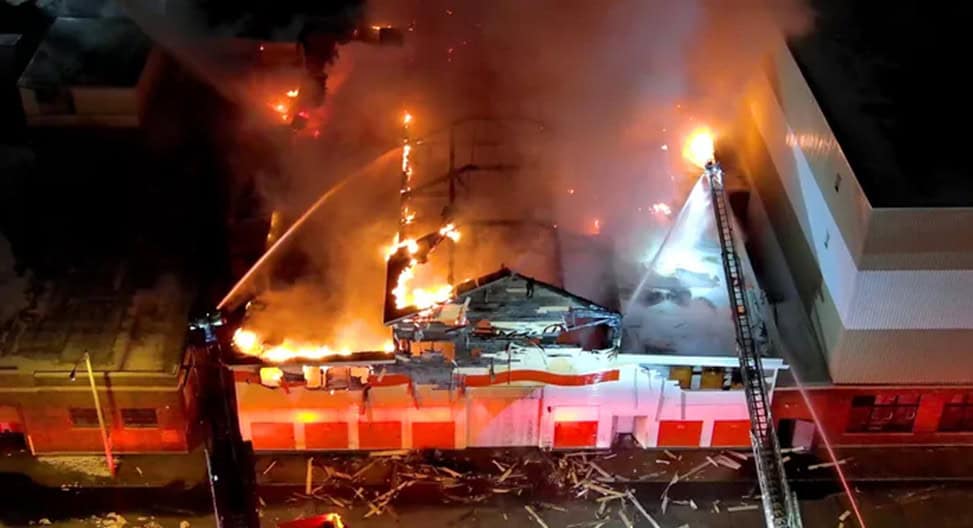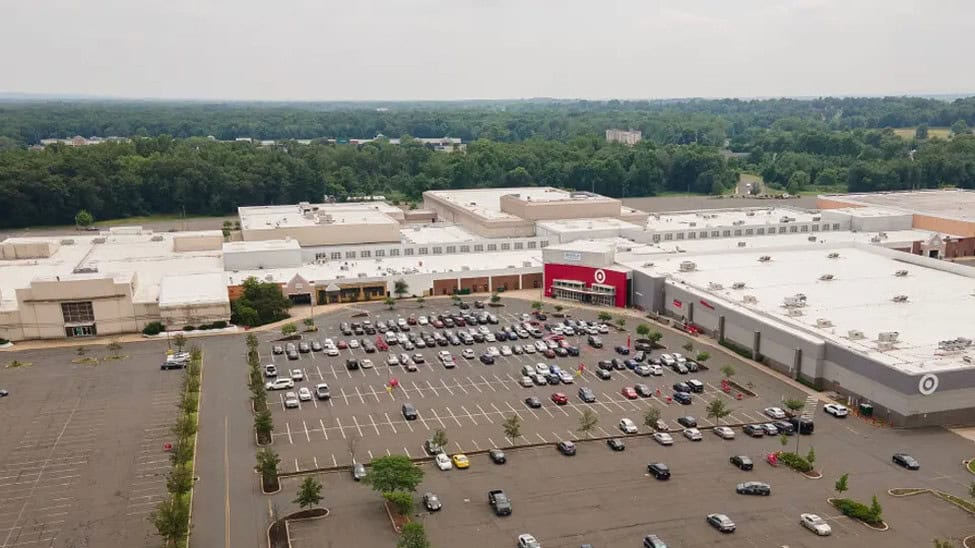
A view from above shows the Enfield Square mall in Enfield, CT on July 11, 2025. (Dave Zajac/Hearst Connecticut Media)
Introduction
On February 5, 2026, Enfield Square Mall in Enfield, Connecticut was forced to close after local building officials determined the property was unsafe for occupancy. The incident highlights Freeze-Related Sprinkler System Failure Risks, as the mall’s fire protection system failed following a prolonged loss of heat within portions of the building. As temperatures dropped, sprinkler piping froze and burst, causing uncontrolled water discharge throughout the facility. Emergency responders and municipal inspectors restricted access while evaluating structural and life safety conditions. While no injuries were reported, the event resulted in extensive water damage, rendered the sprinkler system inoperable, and contributed to a partial ceiling collapse within the mall’s shuttered movie theater.
This Enfield Square Mall incident underscores a recurring cold-weather risk for aging retail properties, particularly those with vacant spaces, deferred maintenance, and compromised building heat.
Why the Fire Protection System Failed
The primary driver of damage at Enfield Square Mall was the absence of adequate heating during winter conditions, a critical prerequisite for wet-pipe sprinkler system reliability. Without heat, water-filled sprinkler piping in unoccupied or underheated areas was exposed to freezing temperatures. As ice formed within the piping, internal pressure increased until sections of pipe ruptured.
Once temperatures fluctuated or ice blockages shifted, water discharged into ceilings and concealed spaces. In this case, sustained leakage saturated building materials and weakened structural components, ultimately contributing to a partial ceiling collapse in the closed movie theater. Compounding the loss, the sprinkler system is now out of service, leaving the mall without automatic fire suppression protection.
Contributing factors likely included vacant tenant spaces, reduced operating budgets, limited building monitoring, and delayed detection of heating or sprinkler impairments. These conditions are common in struggling retail portfolios and materially increase property loss exposure during cold-weather events.
Implications for Property Loss Prevention
Freeze-related sprinkler failures remain among the most preventable causes of large property losses. FM data and NFPA guidance consistently identify heat loss as a leading cause of sprinkler system impairment during winter months. Once a system is compromised, properties face a dual risk profile: water damage from pipe failure and elevated fire exposure due to impaired suppression.
For retail malls, particularly those with anchor vacancies or shuttered entertainment venues, maintaining minimum heat levels is a non-negotiable risk control. NFPA 13 requires wet-pipe sprinkler systems to be maintained at temperatures not less than 40┬░F. FM also recommends continuous temperature monitoring and impairment management protocols.
This event also highlights the cascading impact of sprinkler failures. Water damage extended beyond piping repairs to structural ceilings and finishes, amplifying downtime, repair costs, and code compliance hurdles before re-occupancy.
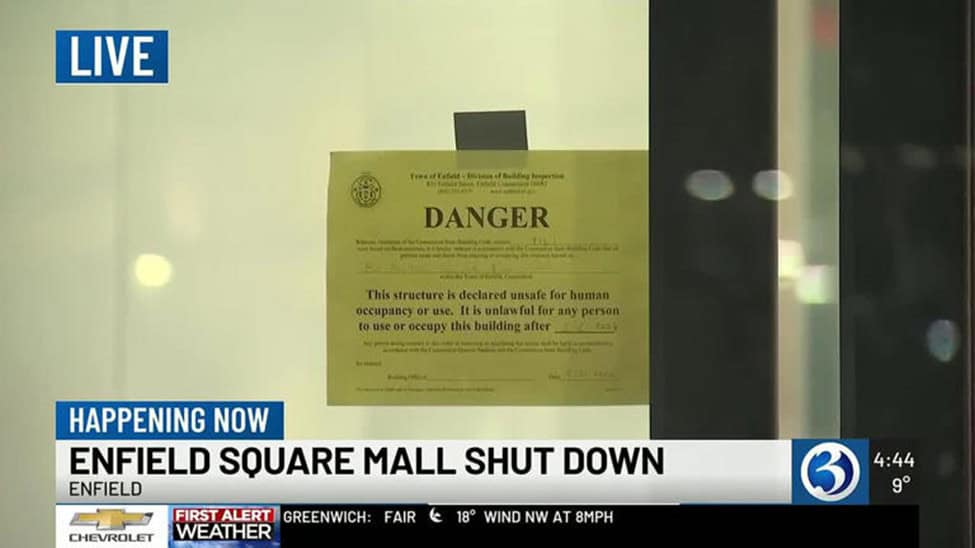
Enfield Square Mall Shut Declared Unsafe to Occupy
Practical Takeaways
Facility owners, operators, and insurers should treat freeze protection as a core operational control, not a seasonal afterthought. Key actions include:
Maintain continuous heat in all sprinklered areas, including vacant tenant spaces, back-of-house areas, and closed suites.
Install low-temperature alarms and remote monitoring to alert staff when space temperatures approach freezing conditions.
Implement formal sprinkler impairment procedures in line with NFPA 25 and FM recommendations.
Conduct regular winterization inspections of insulation, fire protection, and heating systems, especially before and during cold snaps.
Drain and convert systems to dry-pipe or antifreeze configurations where maintaining heat is not feasible.
Coordinate closely with local authorities and insurers when impairments occur to manage risk during outages.
Routine risk assessments and preventive maintenance programs are critical for identifying these vulnerabilities before loss events occur.
Risk Logic engineers help facility owners and insurers identify freeze-related fire protection vulnerabilities and implement practical loss prevention strategies. Contact Risk Logic to evaluate heating, sprinkler protection, and impairment management risks at your facilities.
Bottom Line
Loss of building heat can disable sprinkler systems and escalate property damage, making freeze protection a critical risk control for retail facilities in cold climates.