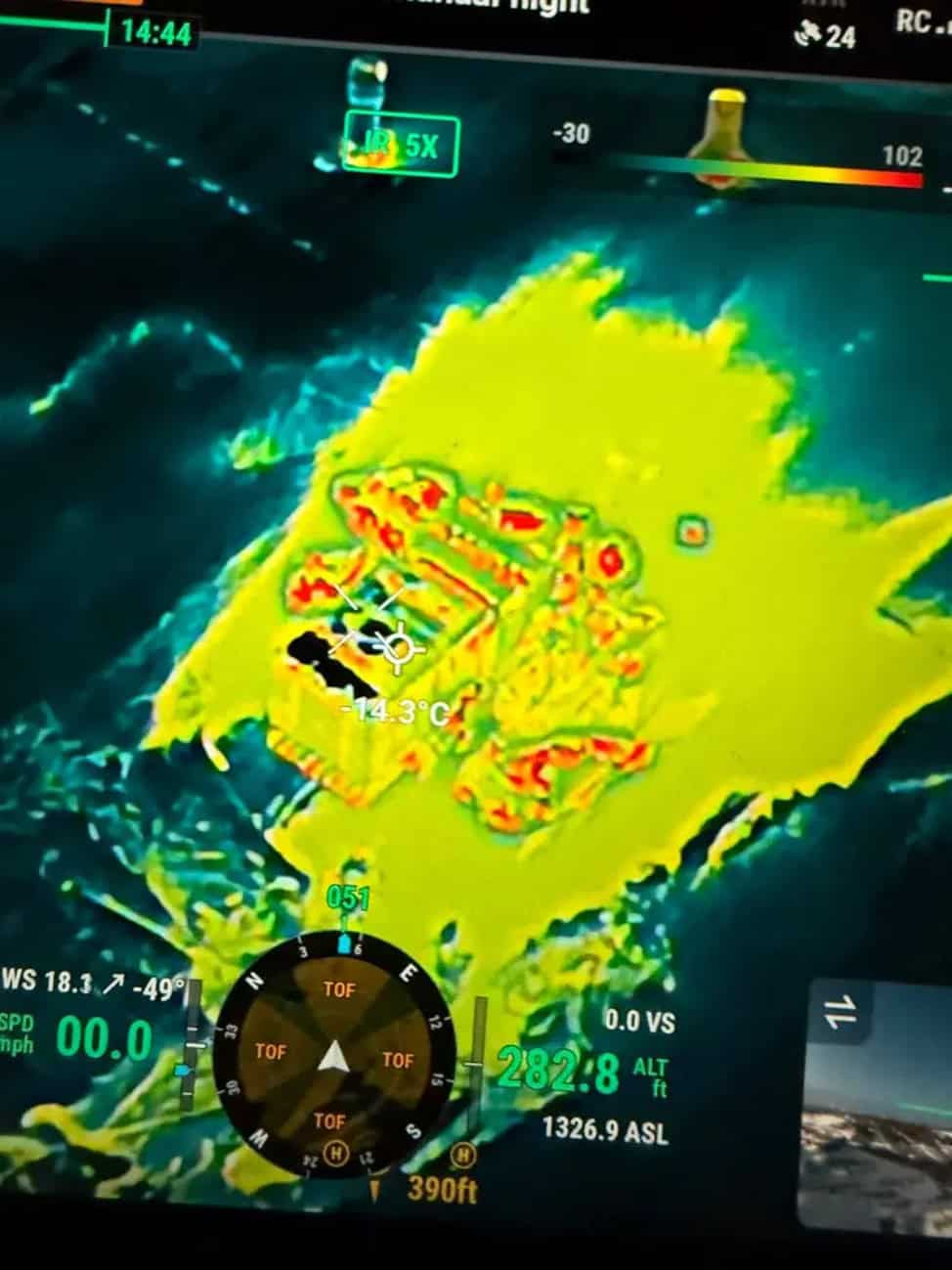
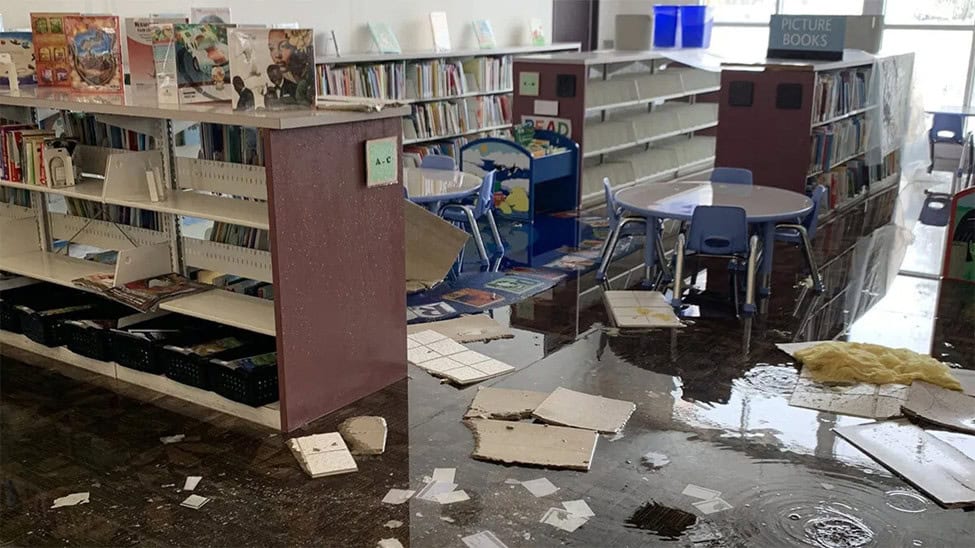
On March 5, 2026, a major fire tore through the 548,000‑square‑foot Global Warehouse Solutions complex in northwest Miami‑Dade County, Florida. This warehouse fire exposes risk in high‑hazard storage environments. The five‑alarm response drew more than 100 firefighters, and officials shifted to defensive operations because of structural integrity concerns. Crews remained on site for days to address hot spots, debris removal, and demolition support. No major injuries were publicly reported. Though, the fire produced prolonged smoke impacts that prompted public health advisories for nearby residents and businesses.
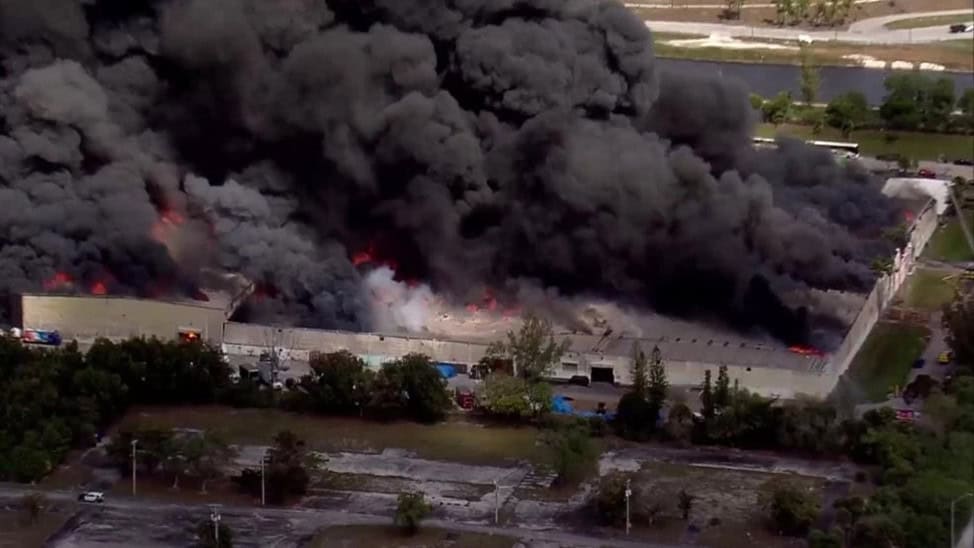
Thick, black smoke could be seen billowing from a warehouse as it burned in northwest Miami-Dade on Thursday, March 5, 2026
Incident Overview & Risk Factors
This Miami-Dade warehouse fire highlights the risk profile of large, multi-tenant logistics facilities. Especially when a single structure concentrates multiple occupancies, varied commodities, and business-critical equipment under one roof. Public reporting indicates the fire involved a very large warehouse footprint and that roof collapse and buried contents complicated extinguishment. This is consistent with the operational difficulty of controlling deep-seated fires in high-challenge storage environments. The proximity of the site to residential neighborhoods also expanded the incident beyond the property line, creating smoke exposure concerns and extending community disruption well after the initial fire attack.
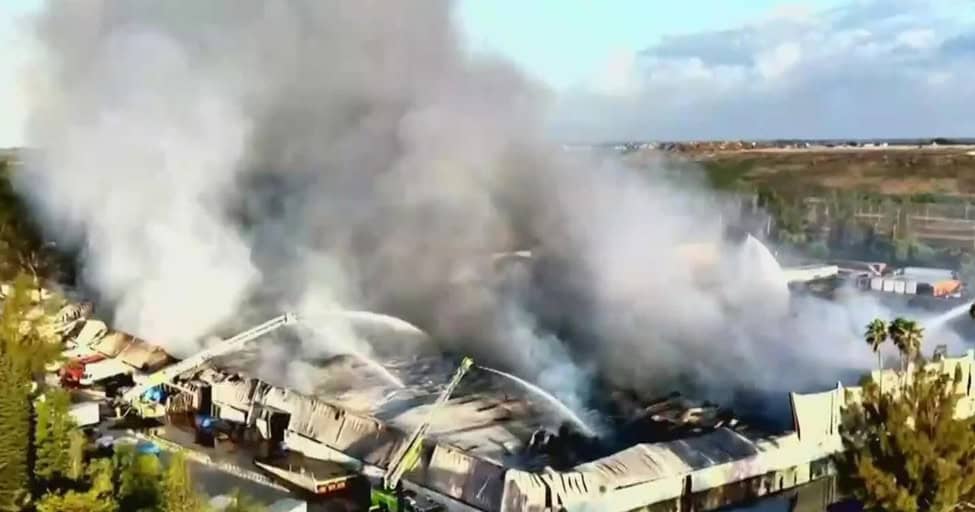
The warehouse continued to smolder days after the fire broke out.
From a property protection standpoint, several risk drivers stand out. Large open warehouse layouts can support rapid fire growth if fire areas are not effectively separated. Multi-tenant configurations can also create uneven control over storage practices, commodity classification, housekeeping, ignition source management, and impairment reporting. Where the tenant mix includes packaging, equipment, electronics, and palletized goods, the fire load can escalate quickly and make manual suppression far less effective once structural involvement begins.
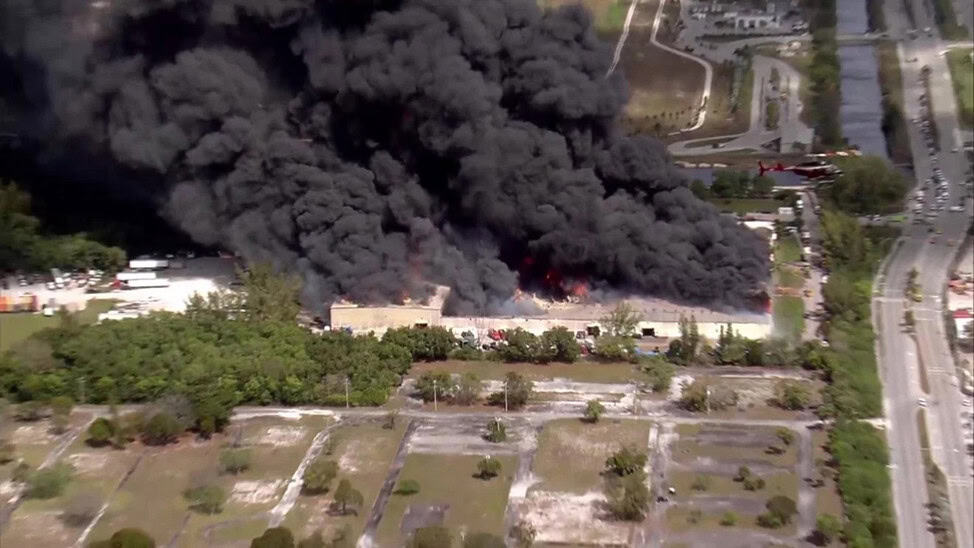
Dense smoke rises from a northwest Miami-Dade warehouse fire as authorities continue to monitor air quality in surrounding communities due to lingering smoke conditions.
Property Loss & Insurance Implications
The most significant lesson is that a warehouse loss of this scale is rarely just a building claim. It also becomes a tenant property, time-element, and cleanup event. News reports describe multiple small businesses losing tools, inventory, and operational assets. Some owners reporting losses in the tens of thousands of dollars. That expands the loss scenario from direct physical damage to a wider business continuity problem affecting contractors, service firms, and local supply chains.
For insurers, brokers, and risk managers, the fire underscores the need to validate both building-level and tenant-level controls against recognized loss prevention benchmarks such as NFPA 13 for sprinkler protection and FM data sheets applicable to storage occupancies and commodity hazards. Public sources have not yet confirmed the facility’s sprinkler design, fire wall arrangement, or commodity protection scheme, so those remain key unanswered questions rather than established facts. That uncertainty itself is a risk signal in large shared-use facilities.
Priority controls include:
Verify sprinkler adequacy for actual commodity, storage height, and tenant use.
Improve fire area separation and limit uncontrolled open-plan storage arrangements.
Enforce tenant material disclosure, hot work controls, housekeeping, and ignition source management.
Maintain current asset valuations and clear delineation of landlord versus tenant insurance responsibilities.
Strengthen business continuity planning for off-site storage, temporary relocation, and equipment replacement.
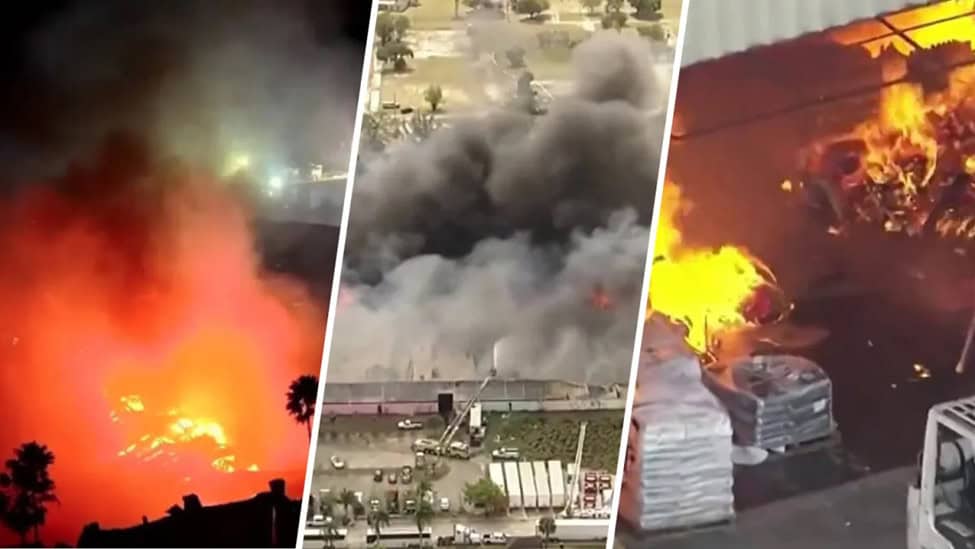
Large flames and heavy smoke engulf a multi-tenant warehouse facility in northwest Miami-Dade, causing widespread property loss and business disruption.
Risk Logic Perspective: Warehouse Fire
Facilities like this require tighter governance than a conventional single-occupancy warehouse. Owners should not rely on lease language alone to manage fire exposure. They need disciplined oversight of tenant operations, periodic engineering reviews, impairment management, and confirmation that protection systems align with the actual hazard, not the original design assumption.
Risk managers should also evaluate exposure accumulation. When many tenants depend on one structure, one fire can create a stacked loss involving property damage, business interruption, debris removal, environmental response, and reputational fallout. Routine inspections, updated statement-of-values data, and pre-loss emergency planning are high-leverage controls in this class of risk.
Risk Logic engineers help facilities identify fire hazards and implement tailored loss prevention strategies. Contact Risk Logic today for a risk assessment of your property.
Bottom Line:
The Miami-Dade warehouse fire shows how quickly a single event in a large multi-tenant storage facility can escalate into a complex property, business interruption, and community-impact loss when fire protection, tenant control, and continuity planning are not ti