The Hidden Risk of Rooftop Combustibles: Controlling Fire Spread Above the Ceiling
Rooftop PV Fire When most people think about fire protection in commercial buildings, they picture alarms, sprinklers, and firewalls—everything happening inside the building. But there's a growing...
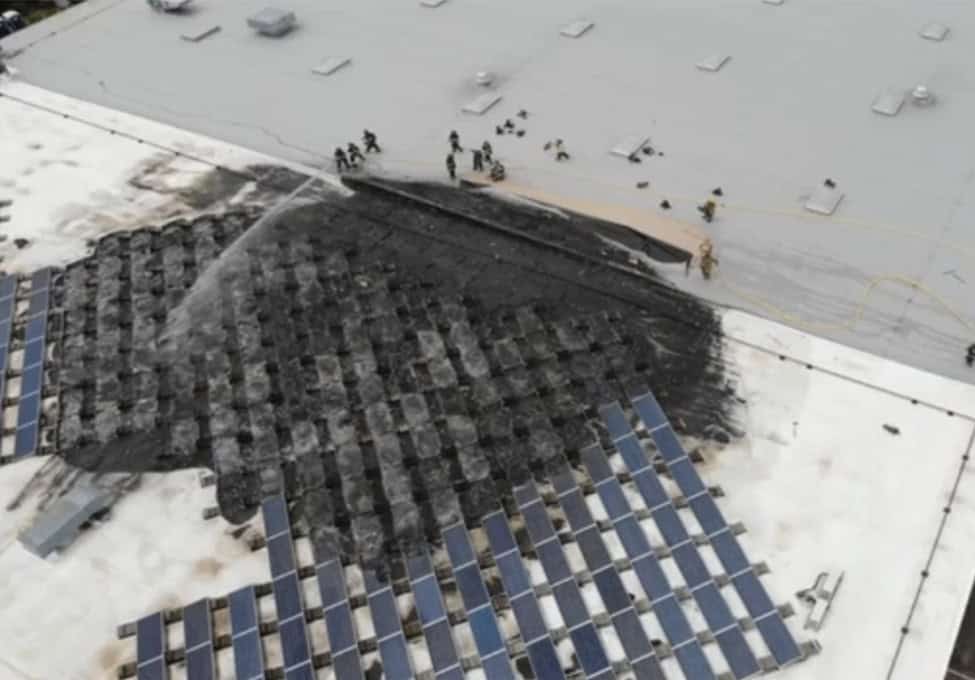
When most people think about fire protection in commercial buildings, they picture alarms, sprinklers, and firewalls—everything happening inside the building. But there's a growing threat quietly heating up just overhead: Rooftop Combustibles. Rooftop assemblies—including membranes, insulation, and especially solar photovoltaic (PV) systems—can significantly influence fire behavior and often fly under the radar. Fires that start or spread on rooftops can move fast, evade interior protections, and cause major damage before responders arrive. With the rise of solar installations and roof retrofits, it's time to stop ignoring the fire risks above the ceiling.
Rooftop Fire Risk Factors
Several materials and systems commonly found on roofs contribute to fire spread:
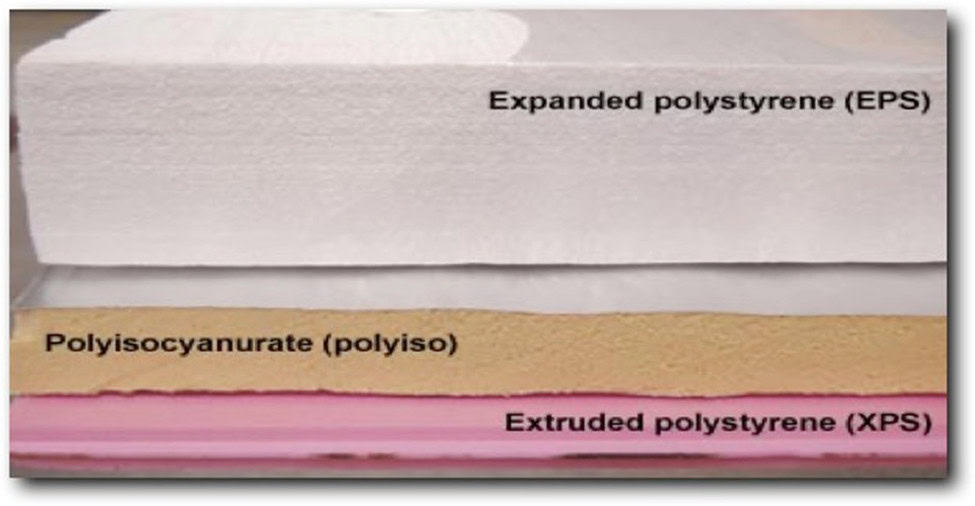
- Combustible roof insulation such as polyisocyanurate, extruded polystyrene (XPS), or expanded polystyrene (EPS)
- Plastic-skinned skylights and smoke vents
- Rooftop solar photovoltaic panels, particularly those with combustible backsheets
- HVAC curbs, expansion joints, and other penetrations
Once ignited, flames on the roof can spread laterally and downward into the building envelope, bypassing interior fire protection and alarm systems. Wind exposure at the roof level can further accelerate flame propagation.
Combustible Roofing Systems and Class A Assemblies
Many commercial buildings, especially older ones, still have roofing systems that include combustible components. Materials like EPS, XPS, or polyisocyanurate foam insulation offer thermal efficiency but pose serious fire risks when not properly protected. These materials can ignite and propagate flames if exposed to electrical faults, mechanical damage, radiant heat from malfunctioning rooftop equipment, or a rooftop fire.
For new construction, FM recommends noncombustible or Class A roof assemblies, which are fire-rated and use noncombustible or fire-resistant components. Selecting a Class A roof assembly is especially important when PV installations are part of the design plan.
If rooftop solar construction is in the plans, or may be added in the future, building owners should proactively select roof systems that support future safe PV integration. This means choosing an above-deck roofing assembly that incorporates a noncombustible insulation layer or cover board directly below the roof membrane.
This proactive choice helps ensure the installation of PV systems will be accepted by large commercial property insurance carriers without costly upgrades.
For existing buildings with combustible roofs, retrofitting options are available. One effective strategy is to recover the existing roof with a 1/4-inch gypsum cover board and a new roof membrane. This upgrade significantly improves fire resistance without requiring a full roof replacement. Alternatively, FM supports the use of FM-Approved maintenance roof coatings in select scenarios. These coatings are tested to enhance fire performance and can extend the service life of aging roofs while reducing combustibility.
Fire Ratings of PV Modules
PV module design plays a critical role in rooftop fire risk. Panels are classified based on fire performance testing, primarily under UL 1703 and UL 61730, which evaluate flame spread and burning brand resistance.
Two major module construction types impact fire performance:
- Glass-Glass Modules: These feature tempered glass on both the front and rear surfaces. The glass acts as a fire barrier, improving structural integrity and reducing combustion potential. These are the most desirable from a fire-resistance standpoint.
- Glass-Backsheet Modules: These have a glass front and a polymer (plastic) backsheet. Although more common and lightweight, the backsheet can melt or ignite under fire exposure, increasing the risk of flame spread or molten droplet hazards.
The use of Class A fire-rated PV modules is strongly recommended. Class A ratings indicate the best performance in fire testing, with limited flame spread and no ignition of underlying materials. However, this rating primarily reflects standalone panel performance and not how the entire rooftop system behaves.
FM emphasizes that true fire performance must consider the full assembly: the module, mounting hardware, membrane, and substrate. This system-level approach ensures the roof behaves predictably under fire conditions.
Importance of a Noncombustible Roof Layer Below PV Modules
FM Property Loss Prevention Data Sheet 1-15, Roof-Mounted Solar Photovoltaic Panels, underscores the importance of a noncombustible roof layer. Specifically, it recommends installing a noncombustible cover board—such as gypsum, mineral fiber, or cement board—directly under the roof membrane and beneath any installed PV array.
Why is this important?
- Limits lateral flame spread across the roof deck in case of ignition
- Prevents vertical fire penetration through the insulation and deck into occupied areas below
- Provides thermal resistance, buying time for emergency responders
- Improves compatibility with FM-approved roof assemblies, satisfying insurance requirements
Cover boards act as a critical barrier between fire-exposed panels and the combustible insulation commonly used in flat roofs. The redirection of the flames caused by the modules greatly increases the heat flux into the roof assembly. Without this layer, the fire could ignite the combustible roof components within minutes.
FM testing has shown that assemblies lacking a noncombustible board layer are far more likely to fail full-scale burn tests. Roof fires that appear minor in origin can grow into multi-million-dollar losses due to inadequate construction below the array.
Updates to FM DS 1-15 Since 2014
The 2014 edition of FM DS 1-15 was an early attempt to define safe design parameters for rooftop PV. Risk Logic reviewed this standard in the January 2015 article. Since then, the data sheet has undergone substantial revisions to reflect emerging risks and industry changes. Key changes include:
- Enhanced Fire Testing Protocols
- Updates to FM Approval Standard 4478
- More stringent flame spread limitations and burn-through resistance
- Cross-referenced with FM DS 1-2, Earthquake; 1-34, Hail Damage; and 1-28 Wind Design
- PV systems should be designed to prevent lateral movement during a seismic event
- PV modules must meet minimum hail resistance levels
- PV systems must not compromise wind uplift resistance of the roof deck
- References updated NEC 2017
- Recommends module-level power electronics to sense and isolate faults
- Recommends that the alarm condition be remotely monitored
- Any PV system installed over a combustible deck must include an FM-Approved noncombustible cover board
- FM Approvals list qualified systems that have passed large-scale burn tests
- All fasteners, rails, and clamps must be FM-Approved and shown to maintain integrity in fire and wind testing
- Spacing and material selection must prevent delamination and panel blow-off during fire exposure or weather events
These changes reflect FM’s emphasis on real-world performance under simultaneous hazards: fire, earthquake, wind, hail, and electrical failure.
Best Practices for Design and Maintenance
To limit fire risk and maximize insurance compliance:
Design Phase:
- Select glass-glass Class A-rated PV modules Approved with the full roof assembly
- Install a noncombustible cover board directly beneath the membrane
- Choose mounting systems that are FM-Approved and rated for high wind uplift
- Use metallic conduit and enclosed wireways for all rooftop electrical runs
Installation:
- Follow manufacturer specs for panel spacing, grounding, and wire management
- Provide sufficient aisles between arrays, penetrations or rooftop equipment, and between PV modules and expansion or control joints
- Install accessible shut-off points outside of PV zones for emergency responders
Inspection and Maintenance:
- Conduct semi-annual inspections and annual testing and maintenance of rooftop systems
- Check for discolored backsheets, loose wiring, or damaged junction boxes
- Inspect roof cover and penetrations for integrity annually
- Document any modifications for insurance and AHJ review
Recent Rooftop Fire Losses
High-profile rooftop fires in recent years have highlighted the urgent need for proactive design and maintenance practices. These incidents underscore the real-world consequences of inadequate construction, poor PV module selection, or insufficient wind and fire protection.
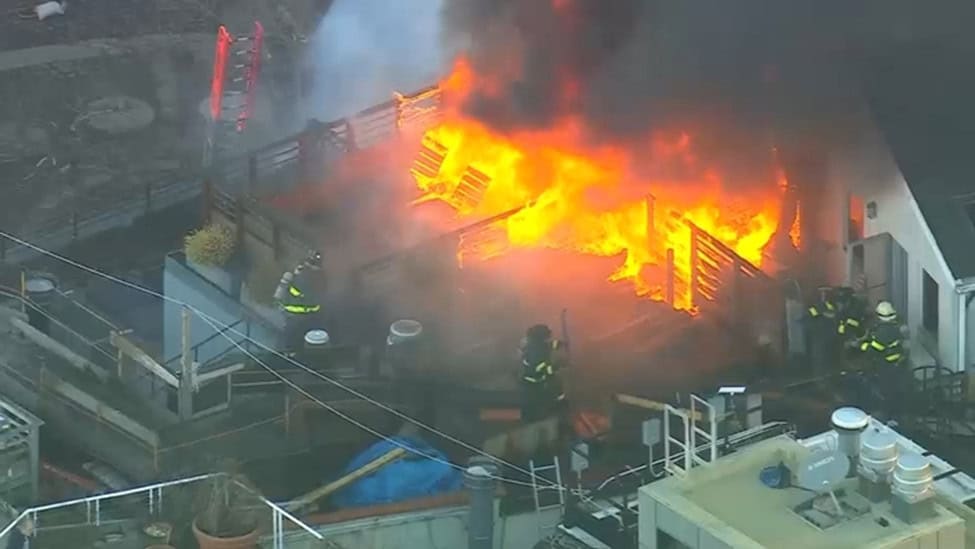
West Village Rooftop Fire – Manhattan, NY (February 26, 2025)
A 2-alarm fire broke out on the roof deck of a 12-story residential building in New York’s West Village. High winds off the Hudson River helped spread flames across a rooftop garden, through a pergola structure, and into an adjacent penthouse.
Over 100 FDNY personnel responded to the blaze, successfully containing the fire to the roof and upper levels. Four individuals were treated for smoke inhalation and minor injuries. The building's sprinkler system helped prevent further fire spread to interior spaces.
The fire damaged the roof membrane, exterior cladding, and penthouse interiors. Loss expectancy was estimated at $5–8 million, accounting for structural repairs, interior finishes, and the displacement of residents. Investigators identified improperly extinguished smoking materials as the likely cause, which ignited a planter box adjacent to a wood-framed rooftop structure.
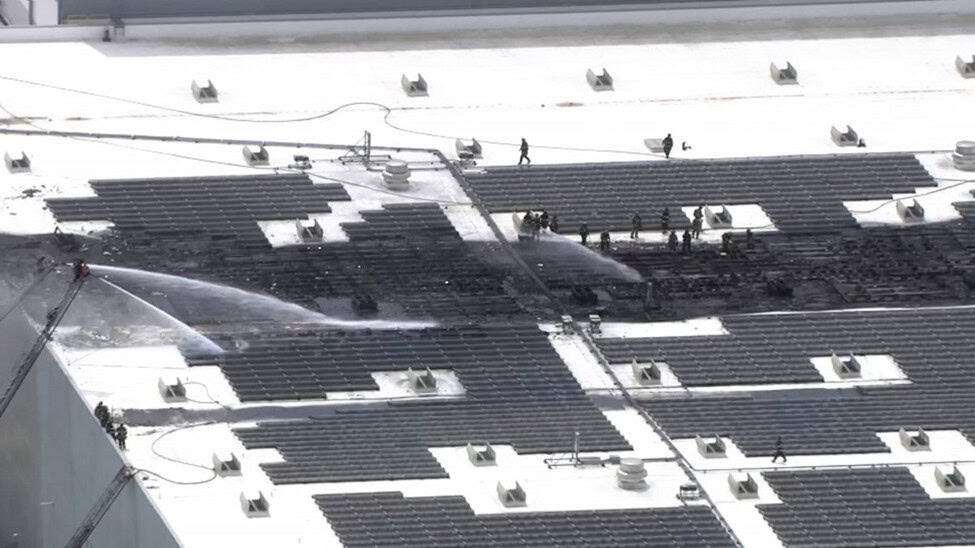
IKEA Distribution Center Fire – Joliet, IL (April 29, 2025)
A large fire erupted on the roof of IKEA's 1.25M square foot distribution center near Chicago, igniting a portion of its rooftop solar array. Winds gusting above 30 mph that day accelerated the fire's spread across the membrane and PV modules. The blaze consumed approximately 100 solar panels and a significant portion of the roof area.
More than 80 firefighters responded with eight engines, five ladder trucks, a squad, and multiple command units. Suppression operations were hampered by challenging rooftop access and ongoing electrical hazards. While no employees were injured, one firefighter was treated for heat-related symptoms.
Estimated loss expectancy from this fire exceeded $10–20 million, including the PV system, roofing assembly, inventory losses, water damage, and operational disruption. Early reports suggest the fire originated in the electrical wiring under one of the panels, and the presence of combustible roofing components beneath the array may have contributed to the fire's severity.
Risk Engineering Takeaways
These real-world losses reinforce several key points:
- Wind exposure plays a significant role in accelerating fire spread across flat roof surfaces
- Roof composition matters: Combustible materials under PV arrays or rooftop features can allow minor ignitions to become catastrophic events
- Emergency response can be complex and costly, especially in large warehouses or urban high-rises
- Losses commonly exceed $5–20 million, depending on structural damage, fire spread, contents loss, and downtime
In both cases, post-loss reviews emphasized the need for noncombustible barriers below PV systems, code-compliant rooftop construction, and elimination of combustible surface features. Incorporating these lessons into design and maintenance decisions can significantly reduce the likelihood and impact of future rooftop fires.
Conclusion
The roof is no longer a passive element of your facility. It now hosts live electrical systems, combustible components, and critical utility infrastructure. Rooftop fires, though less frequent than interior fires, tend to be more damaging due to suppression challenges and their impact on structural integrity.
Designing rooftop PV systems to meet FM’s latest standards—including noncombustible cover boards, tested fire-resistant modules, and robust mounting systems—is the key to preventing these events. By viewing the roof as an integrated fire protection zone, building owners and risk engineers can avoid catastrophic losses that begin above the ceiling.
For a detailed evaluation of your facility’s PV system and rooftop fire resilience, contact Risk Logic to schedule a comprehensive survey. Our engineers can also guide you through FM-compliant design and maintenance strategies tailored to your operations.
Read more in: