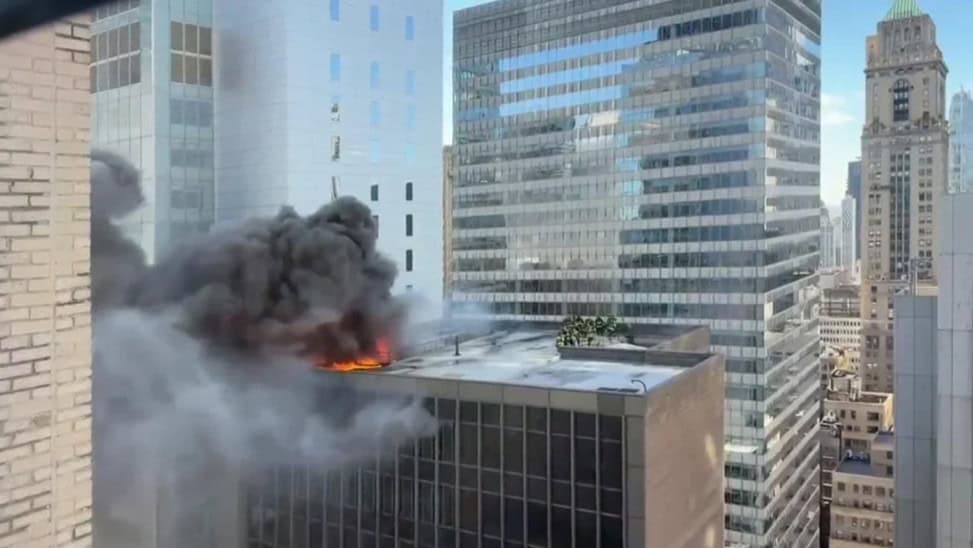
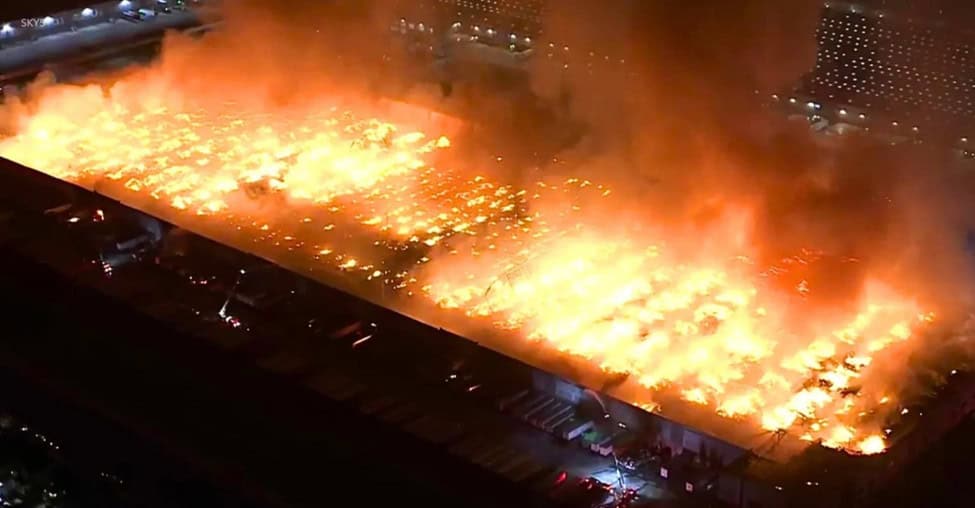
A fire at a glass manufacturing facility in Moraine, Ohio, underscores the property risk exposure associated with construction and maintenance activities in large-scale industrial operations. The incident prompted a multi-agency emergency response, with fire crews working to contain the blaze and prevent extension into active production areas. No injuries were reported, and the fire was ultimately controlled without a total facility loss. The event raised concerns about potential property damage, operational disruption, and environmental impact from smoke. The glass plant fire highlights construction-related fire risks in automotive manufacturing facilities, particularly where active operations intersect with modification or upgrade work.
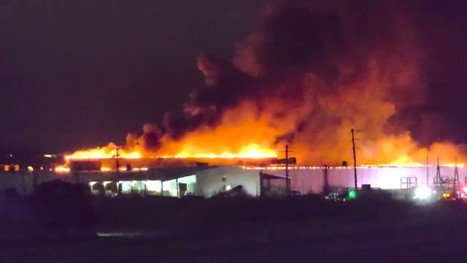 Extensive flames engulf the roof of the facility, sending thick smoke into the air.
Incident Overview & Risk Factors
Early indications suggest the fire originated in a roof area undergoing work, a high-risk condition in operating industrial facilities. Construction and maintenance activities, particularly hot-work activities, introduce ignition sources into environments that may contain combustible materials or concealed spaces. Roof systems are especially vulnerable because insulation, membranes, and adhesives can allow fire to spread undetected.
In large manufacturing plants, these risks are amplified by building size, complex layouts, and continuous operations. Active production lines, including glass processing and coating systems, may generate heat or require ventilation systems that interact with construction zones. Without strict controls, construction activities can unintentionally introduce ignition sources into sensitive areas.
Key contributing factors in construction-related fire risk include:
Hot work activities such as welding, cutting, or torching
Combustible roofing materials and insulation systems
Inadequate fire watch or post-work monitoring
Impaired or offline fire protection systems during construction
Limited detection within concealed or inaccessible areas
These conditions can allow a small ignition event to escalate, particularly when detection and suppression capabilities are compromised.
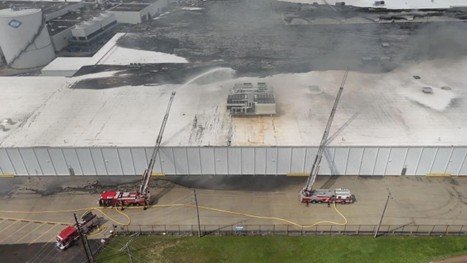 After almost 48 hours, crews were still on the scene trying to get the fire under control.
Property Loss & Insurance Implications
From a property insurance standpoint, construction-related fires present a disproportionate risk of severe loss. Even localized incidents can damage critical building systems and disrupt high-value production equipment. In facilities like this one, custom manufacturing lines may require extended lead times for repair or replacement, significantly increasing business interruption exposure.
Business interruption risk is further elevated when construction activities impact key production areas. As a supplier within the automotive industry, any disruption can create downstream effects across the supply chain. While early reports indicate limited operational impact, the event highlights the importance of managing contingent business interruption exposure tied to construction risks.
Additional loss drivers include:
Smoke and heat contamination of sensitive equipment
Water damage from suppression activities
Delays due to inspection, testing, and recertification requirements
Alignment with NFPA and FM guidance on hot work management, fire protection impairments, and construction risk control is critical for both insurers and facility operators.
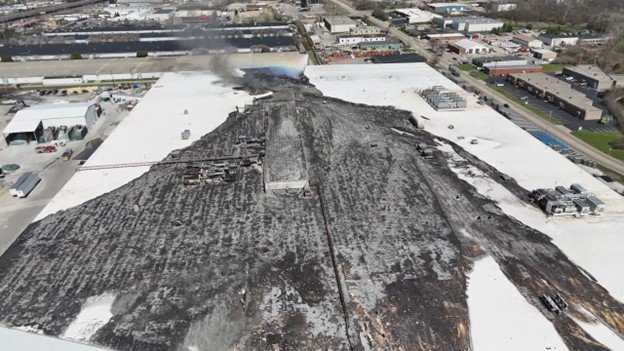 Aftermath of the roof-level fire showing extensive damage to the building’s upper structure and mechanical systems.
Prevention & Control Measures
Enforce formal hot work permitting and supervision programs
Maintain continuous fire watch during and after hot work activities
Avoid or strictly manage impairments to fire protection systems
Separate construction zones from active operations where possible
Increase temporary detection and suppression during construction
Risk Logic Perspective: Construction Fire Risk
Construction and maintenance activities should be treated as high-hazard operations requiring dedicated risk management controls. Facilities must implement structured permit-to-work systems that clearly define responsibilities, authorization processes, and safety requirements for all contractors and internal teams.
Pre-construction planning is critical. Risk assessments should evaluate the interaction between construction activities and existing operations, including proximity to combustible materials and critical equipment. Temporary safeguards, such as additional fire extinguishers, detection systems, or fire barriers, should be deployed where permanent systems are impaired or insufficient.
Ongoing oversight is equally important. Active monitoring of work activities, combined with post-work inspections, can significantly reduce the likelihood that smoldering fires will go undetected in concealed spaces. Coordination with local fire departments and internal emergency teams ensures a rapid response in the event of an incident.
Risk Logic engineers help facilities identify fire hazards and implement tailored loss prevention strategies for construction projects. Contact Risk Logic to strengthen construction risk controls and protect critical operations.
Bottom Line
Construction activities in operating industrial facilities introduce elevated fire risk, making strict hot work controls, fire protection management, and pre-planning essential to preventing significant property loss and business interruption.