Ontario Fire Highlights How Arson Events Escalate in High-Fuel Warehouse Environments
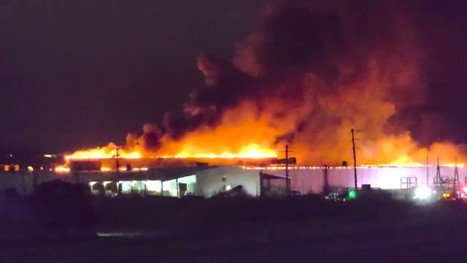
In the early morning hours of April 7, 2026, a large distribution warehouse fire in Ontario, CA triggered a major multi‑agency emergency response. Firefighters arrived to find heavy fire conditions already established, forcing crews into a defensive strategy as flames spread rapidly through the structure. The incident quickly illustrated how arson events escalate in high‑fuel warehouse environments.
quickly illustrated how arson events escalate in high‑fuel warehouse environments.
Authorities have identified the fire as an act of arson. While the ignition source may have been intentional, the Ontario warehouse fire highlights how arson events escalate in high-fuel warehouse environments.
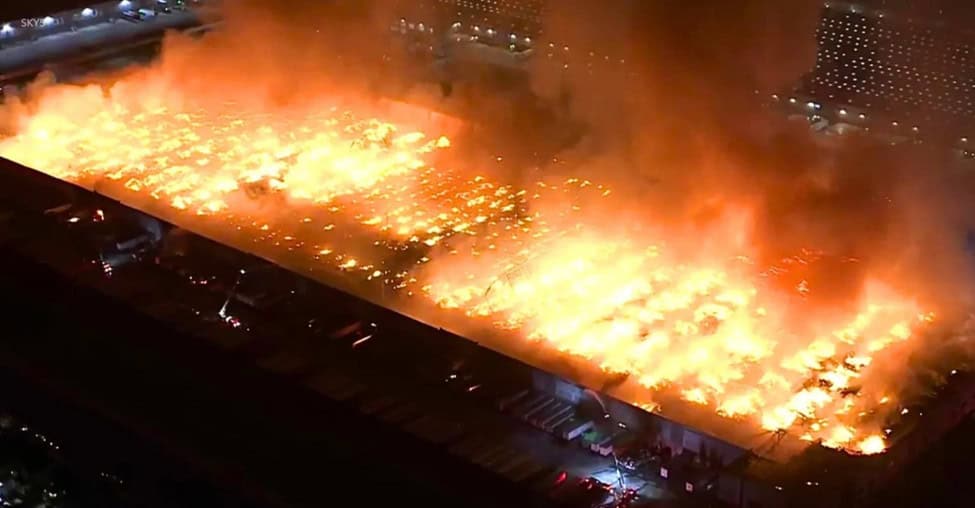
Rooftop engulfed in flames as the fire rapidly consumes combustible materials within the warehouse structure.
Incident Overview & Risk Factors
Because this incident is being treated as arson, the primary risk lesson is not ignition prevention but loss development under severe fire conditions. The facility stored large quantities of paper-based consumer goods, creating a continuous, highly combustible fuel load. Once ignition occurred, fire spread rapidly across storage areas, producing sustained heat release and dense smoke that limited firefighting effectiveness.
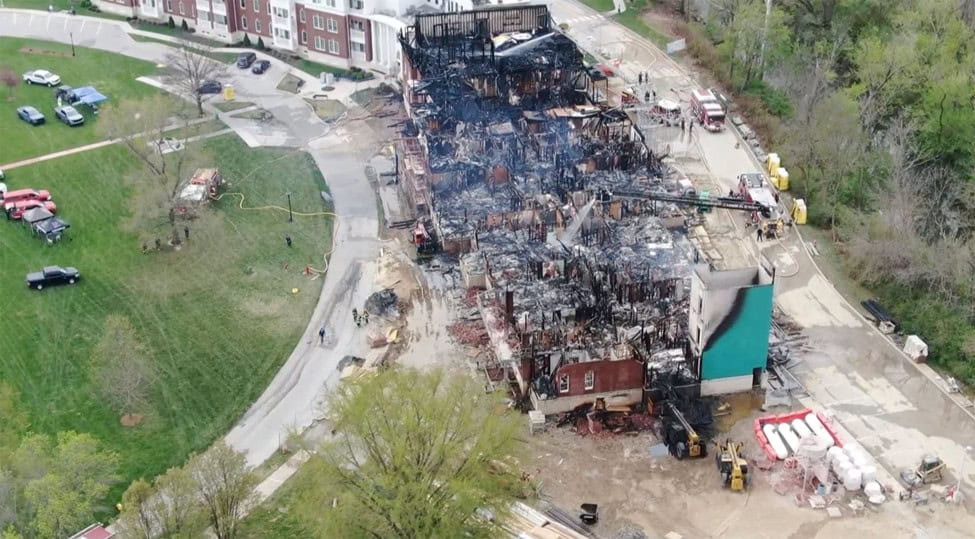
The building’s large footprint and storage configuration further contributed to fire growth. Open layouts and dense storage arrangements allowed flames to travel horizontally without significant interruption. As heat intensified, structural components were exposed to prolonged thermal stress, ultimately leading to roof collapse and further compromising suppression efforts.
Reports also indicate that, although fire protection systems were present, conditions escalated beyond the point at which interior suppression was viable. This progression is consistent with multiple-point ignitions in high-pile storage warehouses.
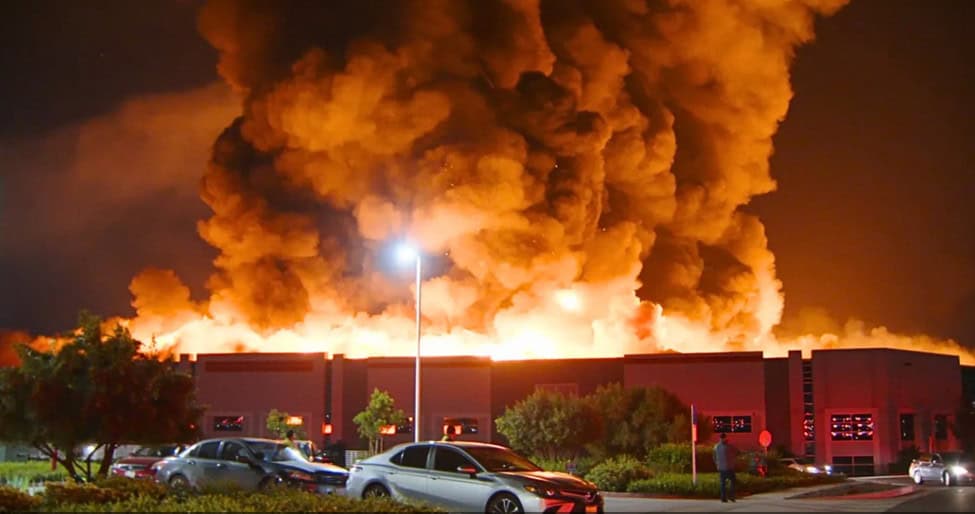
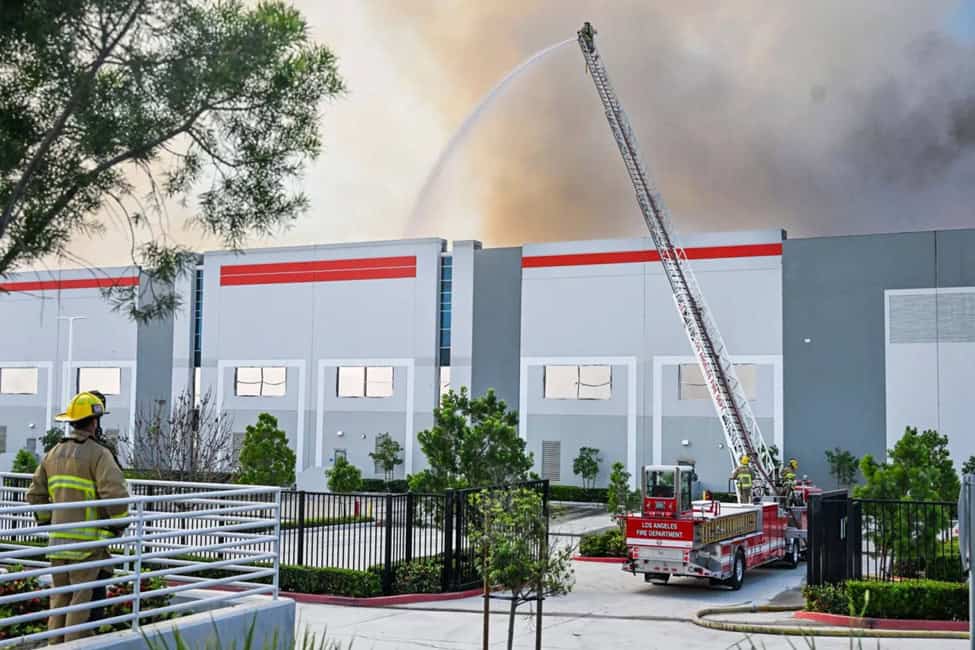
Firefighters battle a six-alarm blaze at the 1.2 million-square-foot warehouse.
Property Loss & Insurance Implications
This event represents a high-severity property-loss scenario driven by fuel load and an overtaxed fire suppression system. The destruction of this structure and its contents introduces multiple layers of exposure for insurers and risk managers.
Key areas of impact include:
Structural damage to the building, including roof collapse and infrastructure loss
Significant inventory loss due to the volume of stored combustible goods
Business interruption affecting distribution operations and supply chain continuity
Secondary losses include debris removal and environmental monitoring
For distribution facilities, content values often exceed building values, making inventory loss the dominant driver of total insured loss. In addition, disruption to logistics networks can create contingent business interruption exposure, particularly in integrated supply chains.
Priority risk controls for similar facilities include:
Align sprinkler design with commodity classification, storage height, and configuration per NFPA 13 or FM Data Sheets
Evaluate storage layouts to maintain adequate flue spaces and aisles, and to limit fire spread pathways
Implement robust impairment management and inspection programs for fire protection systems
Strengthen site security, including access control, surveillance, and after-hours monitoring
Develop contingency plans for alternate storage and distribution operations
Firefighters from Ontario, Riverside and Los Angeles work on hot spots inside a warehouse fire Tuesday, April 7, 2026, in Ontario.
Risk Logic Perspective: Arson Resilience
Warehouse fires involving intentional ignition are not rare, and storage occupancies remain particularly vulnerable due to combustible loading and operational complexity. Facilities must assume that not every fire will be accidental and plan accordingly.
Effective risk management requires integrating security controls with fire protection systems. This includes controlling access to the facility, monitoring employee and visitor movement, securing exterior openings, and maintaining visibility across storage and yard areas. At the same time, facilities must ensure that fire protection systems are capable of controlling a fire during its earliest stages, before conditions escalate beyond system capacity.
Risk Logic engineers help facilities identify fire hazards, evaluate storage and protection strategies, and implement tailored loss prevention programs. Contact Risk Logic today for a risk evaluation of your facility.
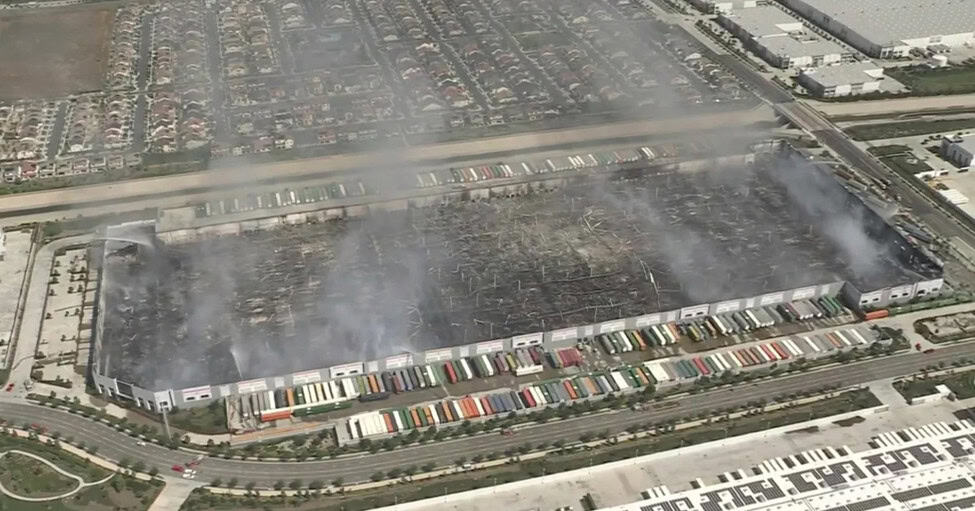
Rooftop view of the aftermath reveals extensive fire damage and structural collapse across the warehouse facility.
Bottom Line
Fires involving high-fuel warehouse storage, whether accidental or intentional, become catastrophic when fire protection and facility controls cannot contain early fire growth.
Read more in: