Materials and Special Hazards
40 articles in this category
Metal Dust Explosions
Most people are aware that organic materials such as flour and sugar dust can cause large explosions. However, many types of metal dust are also explosive. Aluminum, bronze, magnesium, silicon and...
Paper Making Fire Hazards
Every day we touch something made from paper. The box we got our internet order in, the paper you put in the printer, the carton your cereal is in and so many other items. Paper is an item we now...
Protection and Approvals for Combustible Plastic Ductwork
The removal of dust, smoke, and fumes is a critical part of many industrial and commercial operations. Any damage occurring to critical process ductwork can halt operations and result in property...
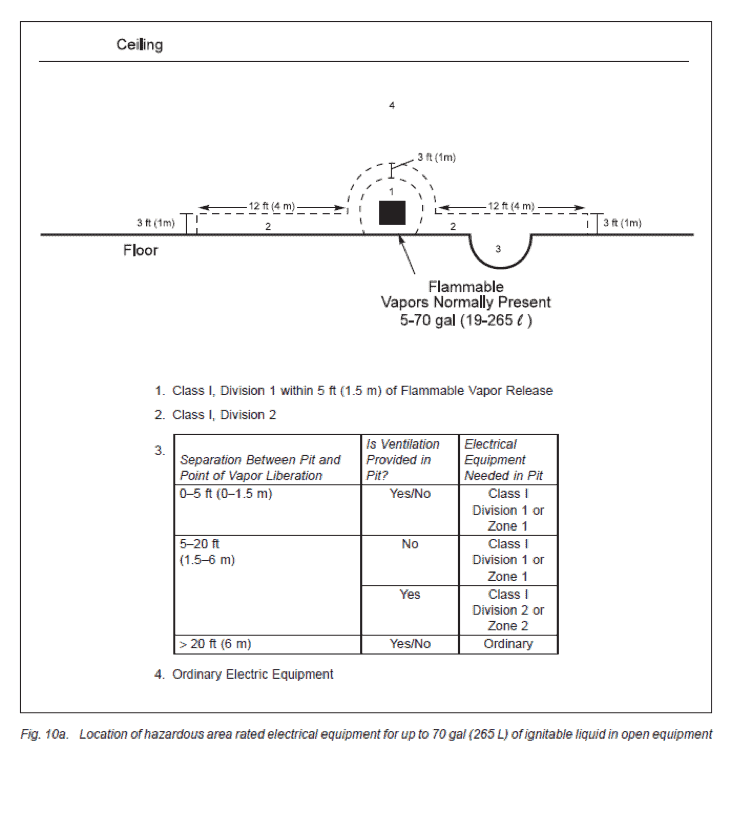
Hazardous Classified Electrical Areas for Flammable Liquids
The National Electric Code (NEC) or NFPA 70 defines hazardous locations as those areas where fire or explosion hazards may exist due to flammable gases or vapors, flammable liquids, combustible dust,...
Flammable, Combustible & Ignitable Liquid Classification According to NFPA, FM Global and DOT
The Department of Transportation (DOT), NFPA and FM Global are very different in how they classify flammable, combustible & ignitable liquids. NFPA 30, Flammable and Combustible Liquids Code, is...
Interim Changes in July 2014 to FM Global Data Sheets 7-32 and 7-29
The only notable change in July 2014 to FM Global Data Sheet 7-32, Ignitable Liquid Operations, is additional information for arranging ignitable liquid processes, handling, and use operations to...
VCE Basics
Introduction The following article is written as a simple primer of VCE phenomenon and criteria. The intent is to discuss some basic concepts and terminology, while excluding highly technical and...

NFPA 704 and the New OSHA Hazardous Material Labeling
You might have noticed that the Occupational Safety and Health Administration (OSHA) has been making a shift in labeling requirements for chemicals. The new system is the United Nations Globally...
Kitchen Hood Suppression Systems
You may have a wet or dry chemical system in the hoods above cooking equipment in your kitchen. Both of these systems should be tested at least semi-annually by a service technician per NFPA 17A, Wet...
Explosion Protection Systems for Combustible Dusts
Processing, handling and storing of combustible dusts within enclosed equipment (i.e., mixers, blenders, mills, separators, cutting tools, holding bins, dust collectors, cyclones, etc.) can easily...
Storage Tanks for Flammable Liquids
You may be considering adding one or more tanks that contain ignitable (flammable and combustible) liquids at your facility. FM Global Data Sheet 7-88, Storage Tanks for Flammable Liquids, gives...
Changes to FM Global Data Sheet 8-9 - Storage of Class 1, 2, 3, 4 and Plastic Commodities (2011)
Between March 2010 and now, FM Global has made two revisions to this Data Sheet. In September 2010 the following revisions were made: The maximum linear and area spacing for K25.2EC (K360EC)...