Sprinkler Maintenance
22 articles in this category
Another Look at Seismic Protection for Sprinklers
Determining the need for seismic protection for a sprinkler system and designing the protection used to be a straightforward task. The designer would look on an Earthquake Zone Map in NFPA 13 to see...
Automatic Sprinkler Performance
The Effectiveness of Automatic Sprinklers Automatic sprinklers are the most effective fire protection in buildings overall available. Based on studies and loss experience, when sprinklers are...
Heat Transfer Systems
Heat transfer systems are used widely throughout various industries. Their most common use is in chemical processes where temperature control is needed for large quantities of materials. The greatest...
Solving the Problem of Pressure Reducing Valve Testing
Pressure reducing valves (PRV) are frequently used in high rise buildings to keep the pressure on sprinkler systems below the allowable maximum, typically 175 psi, when the supply to the systems can...
Microbiologically Influenced Corrosion (MIC) - Part 2
In our April 2000 article, we detailed what microbiologically influenced corrosion (MIC) is and what it can do to fire protection system (FPS) piping. This is a continuation of our previous...
Pressure Reducing Valves
In fire protection service, pressure reducing valves (PRV's) can be found on standpipes and automatic sprinkler systems in high-rise buildings, in pump houses, on public and private gravity water...
Ice Plugs
What Is An Ice Plug? When, Where, And Why Do They Form? Ice plugs can be a grave problem since they have the ability to seriously impair sprinkler system piping. Contrary to popular belief, ice...
1 in 16,000,000 Sprinklers Do What?
Automatic sprinkler protection is considered the single most effective tool in preventing loss and damage from fire. However some people still worry about the possibility of unexpected water...
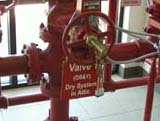
Earthquake Protection for Sprinkler Systems
It is important to remember that the building causes the strains on sprinkler piping during earthquakes. If sprinkler piping could be isolated from the building, earthquake strains could only enter...
Microbiologically Influenced Corrosion (MIC)
In 1996 the NFPA began receiving inquiries about MIC. What is MIC? It is a corrosion problem characterized by pinhole leaks in metallic piping systems often after only a few years of service. MIC is...