December 4th, 2025
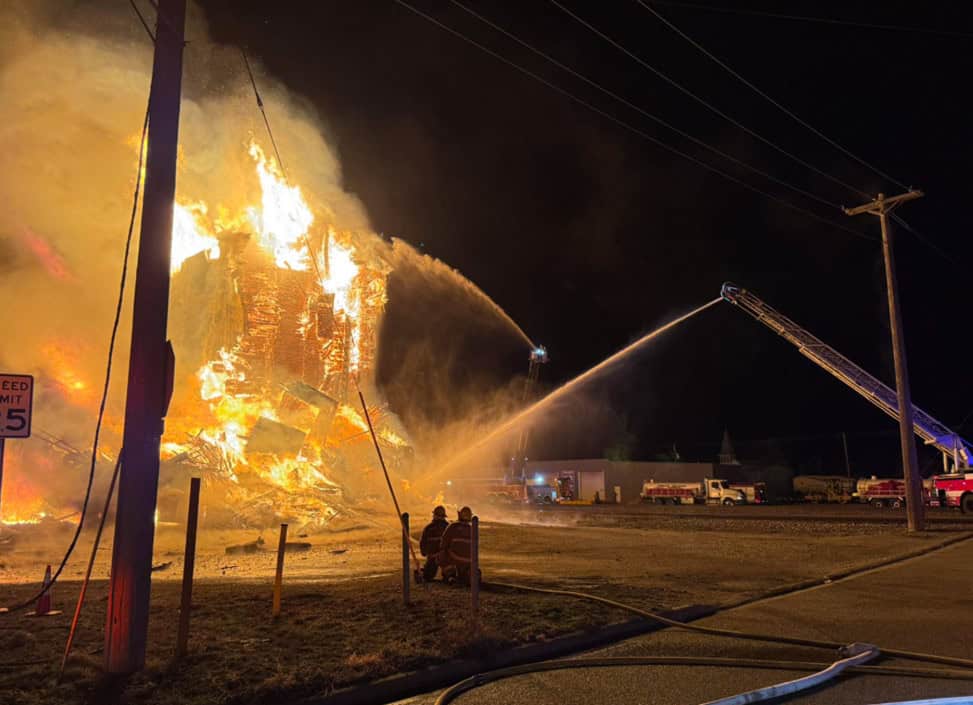
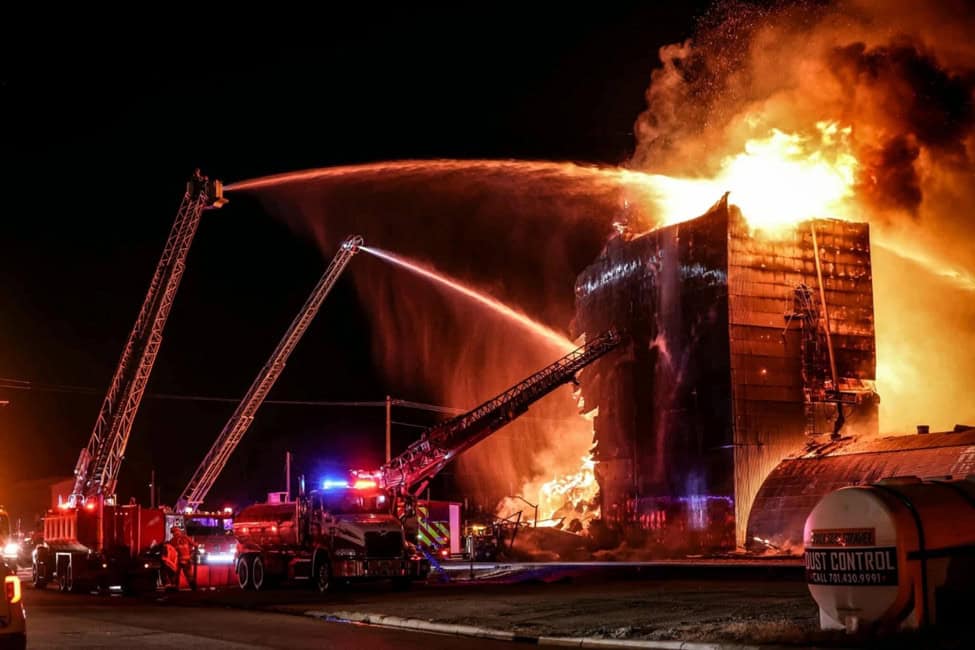
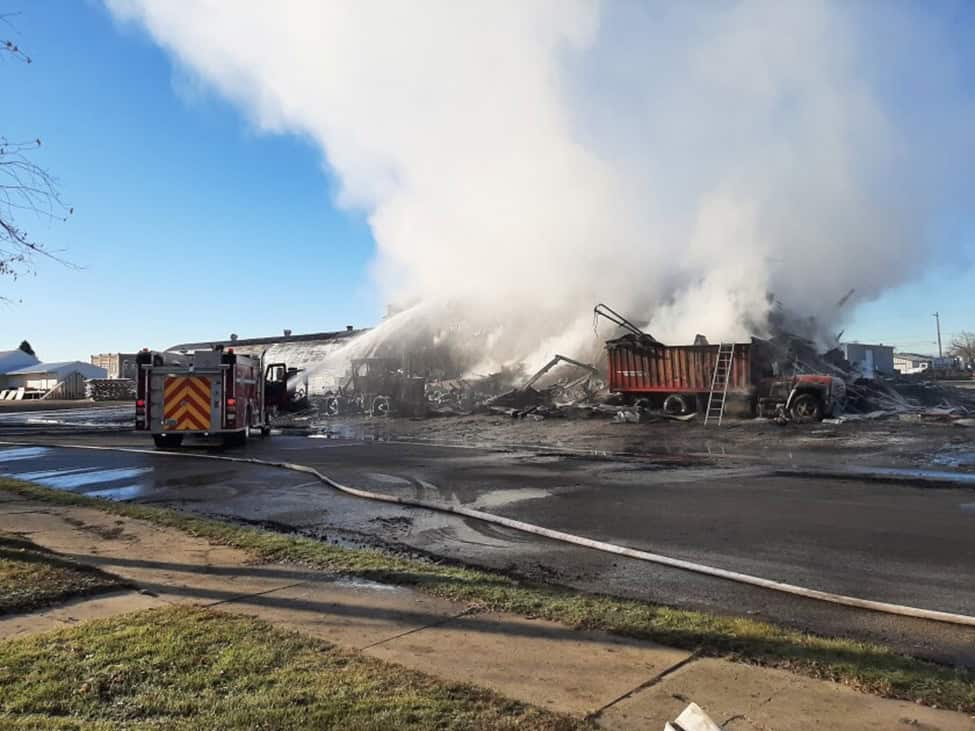
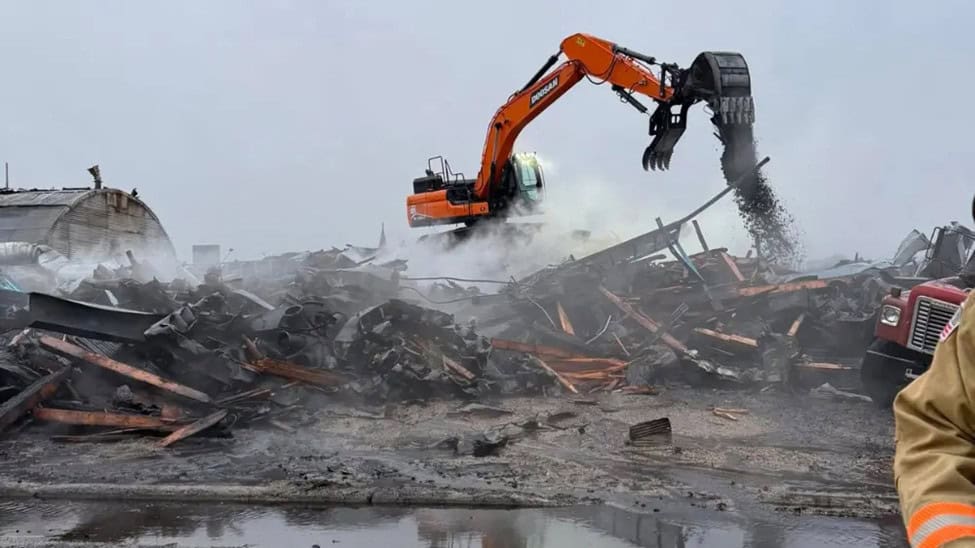
A fire broke out at a grain elevator in Mayville, North Dakota, on Saturday night, November 15, 2025. The blaze began between 7 and 8 p.m. at 42 1st Avenue NE. Fire departments from Mayville and surrounding communities battled the blaze for hours as wind carried embers several blocks through nearby residential neighborhoods, and the elevator structure ultimately collapsed. By Sunday, the site was a rubble pile, and crews continued to monitor for hotspots while residents were asked to conserve water so the municipal plant and tower could recover from firefighting demand. This grain elevator fire exposes agricultural storage vulnerabilities.
The fire was declared contained on November 16, but the incident did not end with the initial response. Firefighters were called back early Wednesday morning when the fire rekindled at the site, reinforcing how deep-seated combustible materials in grain handling structures can smolder long after visible flames are knocked down. While no injuries were reported, the loss eliminated a key regional grain-handling asset and stressed local utilities, underscoring how agricultural fires can quickly become community-scale events.
Why the Fire Spread
Grain elevators concentrate large volumes of combustible products (generally class III commodities) in tall, vertical structures. Once a fire is established in bins, galleries, or conveyor systems, flames can travel through leg housings, spouts, and headhouses, making access difficult and allowing fire to climb and spread internally. Older or legacy elevator structures, particularly those that are partially wood-frame or incorporate combustible components, are vulnerable to early structural compromise under fire exposure.
Combustible grain dust acts as both a fuel bed and a potential explosion hazard. Accumulated dust on ledges, beams, and equipment can ignite and contribute to rapid flame spread, while burning dust and embers can be lofted and carried off-site, as occurred in Mayville, where glowing embers were observed eight to nine blocks away. This increases the risk of secondary ignitions on nearby roofs or outbuildings.
Rural water supply constraints further compound loss potential. Agricultural facilities often rely on relatively modest municipal systems, supplemented by mutual aid and tanker shuttles. Sustained flows for multiple large-caliber streams can deplete storage tanks and reduce system pressure, which is why Mayville officials asked residents to limit water use for several days after the fire so the water plant and tower could recover.
Implications for Property Loss Prevention
For risk managers and insurers, the Mayville incident is a textbook case of how combustible grains, structural configuration, and water supply limitations converge to drive loss severity at agricultural facilities.
Standards such as NFPA 660, Standard for Combustible Dusts and Particulate Solids, set out requirements for housekeeping, dust collection, ignition controls, and explosion protection in grain handling environments. NFPA 13 and NFPA 72 provide the framework for automatic sprinkler and detection systems where conditions permit, while explosion venting and isolation per NFPA 68, Standard on Explosion Protection by Deflagration Venting, and NFPA 69, Standard on Explosion Prevention Systems, may be appropriate for enclosed conveying or bin systems.
From a property loss prevention standpoint, the key implications include:
- Grain elevators remain high-hazard occupancies where a single ignition can result in total structural loss and long-duration operations.
- Municipal fire flow and water storage for rural or small-town systems may be insufficient without pre-planned supplemental supplies and mutual aid.
- Long-term operational and business interruption impacts can be significant when a regional elevator or seed facility is removed from service during harvest or storage seasons.
Practical Takeaways
Facility owners, operators, and underwriters should treat the Mayville fire as a catalyst to reassess agricultural storage risks and protections. Priority actions include:
- Strengthen combustible dust control
- Implement rigorous NFPA 660–aligned housekeeping, including scheduled cleaning of galleries, headhouses, and tunnels.
- Upgrade dust collection, filtration, and duct systems to minimize fugitive dust and accumulation.
- Control ignition sources and equipment hazards
- Enforce formal hot work permitting, fire watch, and cooldown verification for welding, cutting, and repairs.
- Use preventive maintenance and infrared thermography to identify hot bearings, misaligned belts, and overheating motors on legs, conveyors, and dryers.
- Improve structural and protection resilience
- Evaluate opportunities to replace or protect combustible structural components and conveyor belts with noncombustible or fire-resistive alternatives.
- Consider targeted automatic fire suppression or spark detection and extinguishing systems at critical transfer points and within drying systems where technically feasible.
- Address water supply and emergency response
- Conduct fire flow and water-supply analysis for elevator complexes, including hydraulic modeling of municipal systems and assessment of required flows for worst-case scenarios.
- Develop pre-incident plans and joint drills with local fire departments and mutual-aid partners, including provisions for tanker shuttles, drafting sites, and prolonged operations.
Risk Logic engineers help grain and agricultural facilities identify combustible grain/dust hazards, evaluate water supply limitations, and design tailored fire protection and emergency response strategies before an incident occurs. Contact Risk Logic today for an evaluation of your grain handling facility.
Bottom Line
To protect against agricultural storage vulnerabilities, grain elevators and agricultural storage facilities require purpose-built fire protection, dust control, and water supply planning so that a single ignition does not escalate into a community-wide emergency.