December 16th, 2025
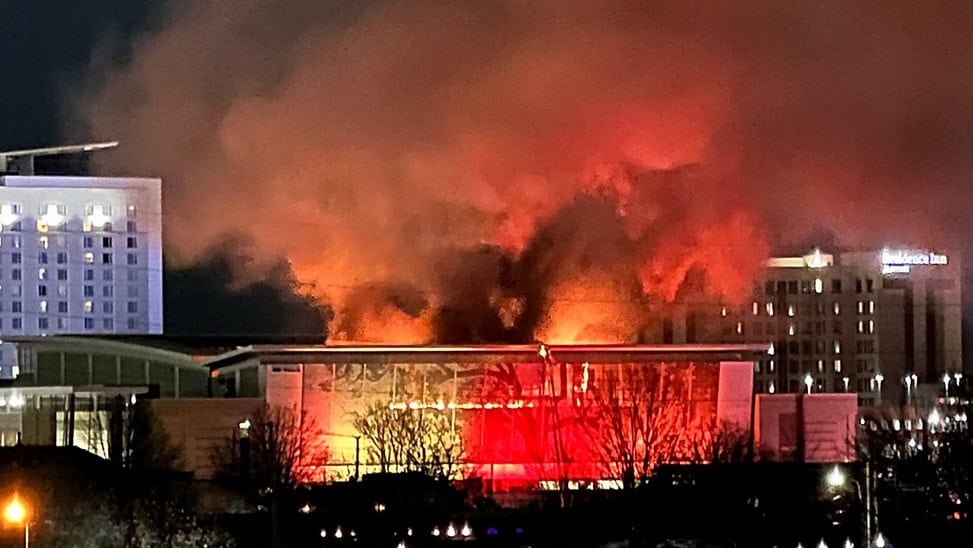
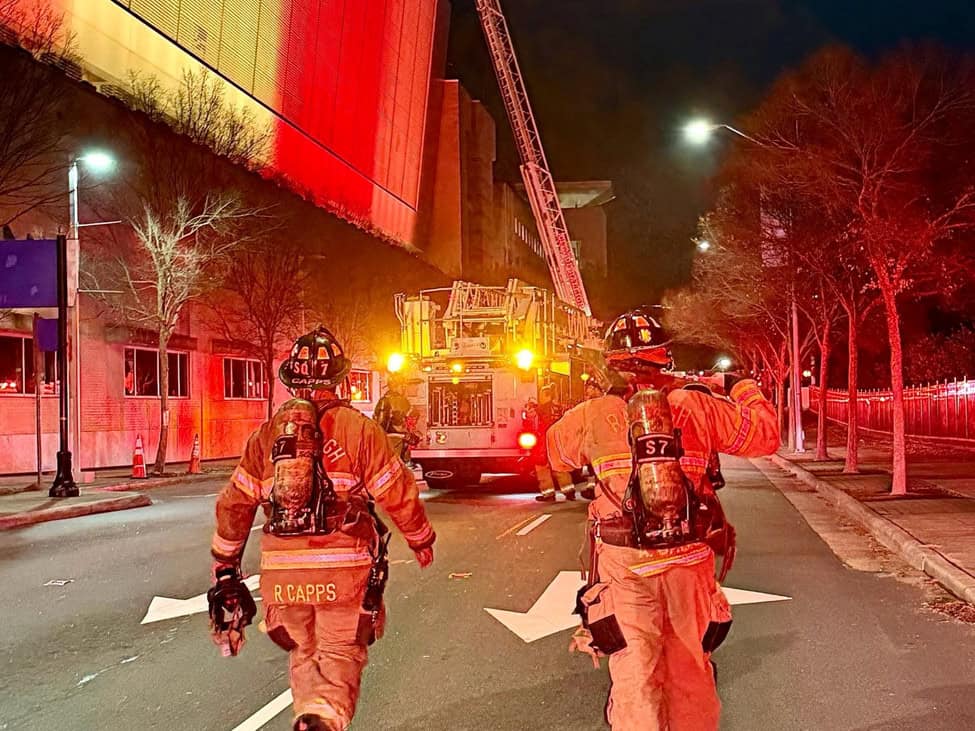
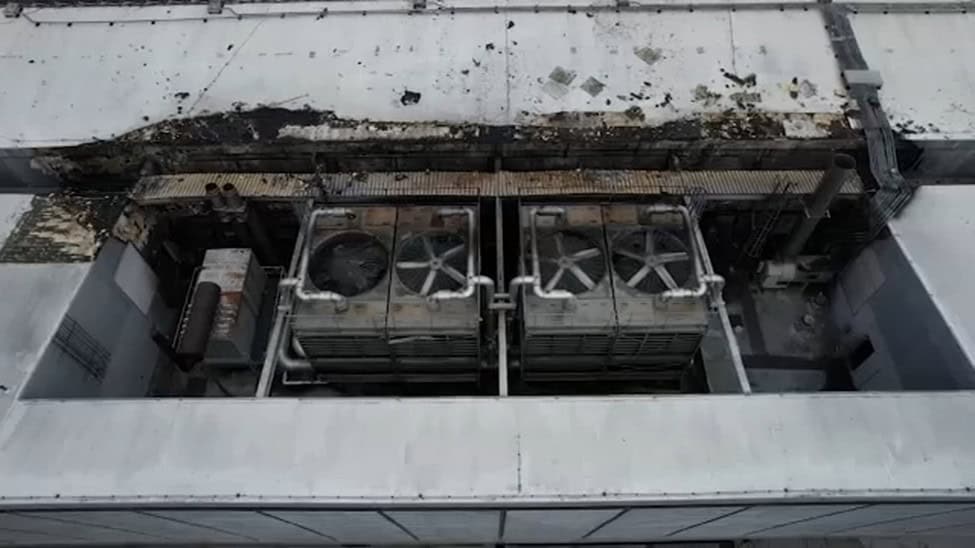
Late on December 1, 2025, a fire broke out on the roof of the Raleigh Convention Center in downtown Raleigh, North Carolina. The fire, believed to have originated in a rooftop HVAC unit, triggered a full-scale response shortly before 9:30 p.m., with flames and heavy smoke visible across the city skyline. Raleigh Fire Department units arrived within minutes and contained the fire within approximately 25 minutes, preventing expansion into the main assembly spaces below.
City officials reported that the fire was largely confined to the roof and mechanical areas, though heat exposure affected steel structural members and suppression water caused secondary damage to interior spaces including food service and storage areas. Estimated damage was approximately $2 million. No injuries were reported, and the building was unoccupied at the time.
Why the Fire Spread
The incident illustrates how rooftop mechanical fires can escalate rapidly even in modern, sprinklered facilities.
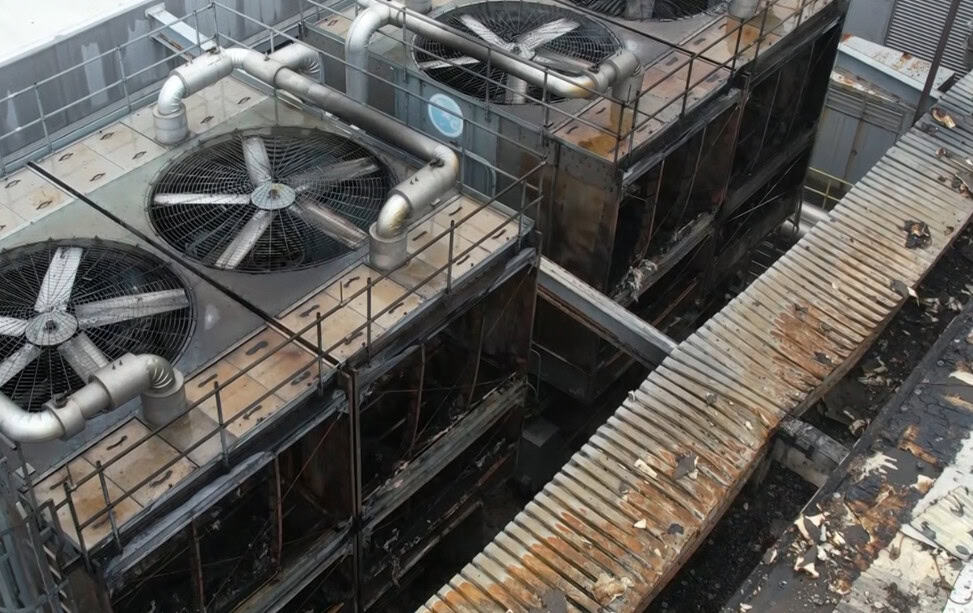
The suspected ignition source was a mechanical failure within a rooftop HVAC unit. The fire involved the cooling towers located on the roof. Such equipment concentrates electrical components, motors, belts, lubricants, and sometimes gas or refrigerant lines in exposed locations subject to wind and delayed detection. Once ignited, roof fires can spread horizontally across combustible roofing assemblies and mechanical platforms before suppression efforts can be fully established.
Compounding the exposure, city inspection records show the facility’s fire alarm and sprinkler systems failed an annual inspection earlier in 2025. While the city reports that deficiencies were corrected before the fire, any lapse in inspection follow-through raises concerns about overall system reliability and oversight discipline. Rooftop fires also carry increased risk due to wind exposure, which can intensify flame spread, drive fire across roof assemblies, and accelerate heat release before suppression efforts can fully take effect.
Implications for Property Loss Prevention
For insurers, facility owners, and risk managers, this loss reinforces that mechanical systems remain a leading and often underestimated ignition source.
Key implications include:
- Rooftop HVAC and mechanical equipment must be treated as high-risk assets, not ancillary systems.
- Inspection failures, even when later corrected, indicate breakdowns in governance and risk accountability.
- Roof-level fires may bypass interior detection and suppression systems, delaying effective control.
- Heat exposure to structural steel and water damage from suppression can drive losses even when fire spread is limited.
Relevant guidance includes NFPA 13 for sprinkler system reliability, NFPA 72 for alarm system integrity, NFPA 241 concepts for fire safety during construction, alteration, and demolition operations, and FM Property Loss Prevention Data Sheets covering rooftop equipment protection and maintenance.
Loss prevention priorities include:
- Enhanced preventive maintenance programs for rooftop HVAC and electrical systems
- Formal verification and documentation of all inspection-related corrective actions
- Non-combustible or Class A roofing assemblies and non-combustible expansion joints, where present
- Pre-incident planning with local fire departments for roof access and hose deployment
- Use FM Approved cooling towers or use noncombustible fill material
Practical Takeaways
Facilities with large roof areas and complex mechanical systems should act decisively.
- Conduct focused risk assessments of rooftop mechanical zones, including ignition sources and combustibility of roof assemblies.
- Require third-party verification after failed inspections to confirm systems are fully restored to code and insurer expectations.
- Conduct regular rooftop housekeeping to confirm physical separation between HVAC units and combustible materials.
- Validate fire department access, standpipe coverage, and hose stretch feasibility for roof-level incidents.
Risk Logic engineers help facilities identify mechanical-system fire hazards, validate inspection follow-through, and implement targeted strategies to reduce roof-level fire risk. Contact us today to perform a property loss prevention survey of your facility and your human element programs.
Bottom Line
Rooftop mechanical fires expose a blind spot in many protection strategies, underscoring that inspection discipline and HVAC risk management are critical to limiting property loss.
Resources
wral.com/news/investigates/raleigh-convention-center-fire-inspection-history-november-2025/
https://abc11.com/post/raleigh-convention-center-fire-investigation-city-records-show-alarm-sprinkler-system-failed-past-inspections-2025/18240597/ https://www.wbtv.com/2025/12/02/huge-fire-sparked-roof-citys-convention-center-north-carolina/